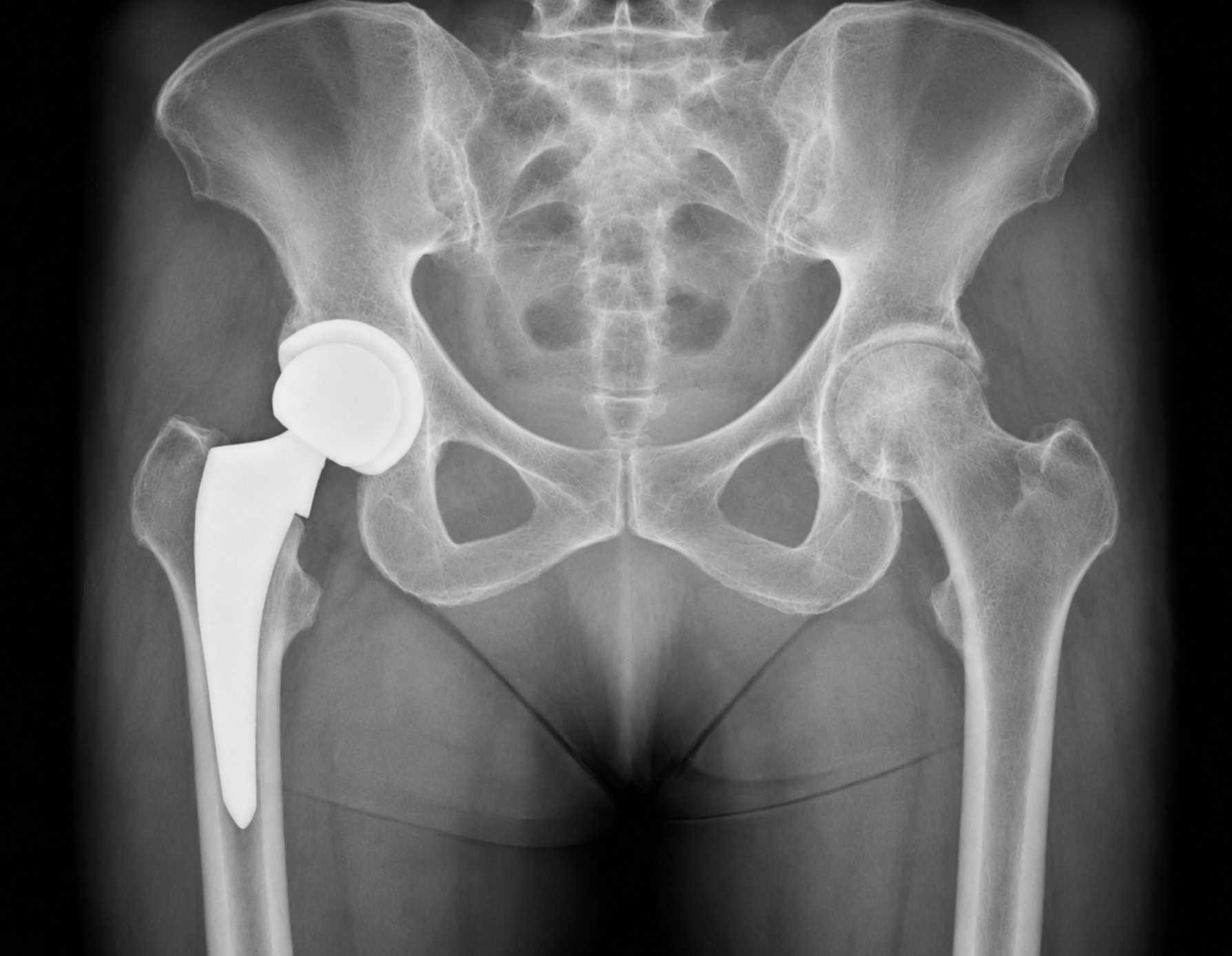
My Approach to Direct Anterior Hip Replacement
I believe that successful hip replacement surgery is about more than simply replacing a worn-out joint. It is about helping you return to the activities you enjoy, supporting your recovery and achieving a reliable, long-lasting result.
In my practice, I favour the direct anterior approach to hip replacement wherever clinically appropriate. This approach allows me to access the hip through a natural interval between muscles, with the aim of preserving surrounding muscle attachments and minimising soft tissue disruption.
I also use an “off table” technique - where I am not reliant on a specialised table - whereby I am in control of my patient’s leg position at all times of the operation.
Research suggests that the direct anterior approach may offer certain advantages during the early recovery period, including less postoperative pain and a modestly faster return to mobility in some patients. However, I also recognise that established surgical approaches generally achieve similarly good long-term outcomes.
I do not believe that one surgical approach is right for every patient.
Every patient is different, and factors such as your anatomy, bone quality, previous surgery, medical conditions and personal goals can influence which approach is most suitable.
Although the direct anterior approach is my preference in suitable patients, I am trained in alternative approaches and will recommend a different technique when I believe it is more appropriate for your circumstances.
My philosophy is straightforward: I believe the surgical approach should be tailored to the patient, rather than the patient being tailored to the surgical approach.
Through a personalised assessment and careful surgical planning, my goal is to offer you the most appropriate treatment, balancing surgical safety, early recovery and long-term function.
Ultimately, my priority is not only how quickly you recover in the first few weeks, but how well your hip functions for years to come.